
Floriana FC - Spectata takes a look at the history of the club.

Floriana FC is one of those clubs that quietly proves you don’t need a superclub badge or a mega‑stadium to feel like you’re standing at the heart of football history.
Beyond Beach Resorts: Why Floriana Matters
When most people think of Malta, they picture sun, sea and holiday brochures – not green‑and‑white scarves, derby days and century‑old rivalries. But step into Floriana, just outside Valletta, and you find a town where football has been woven into everyday life for well over 100 years.
This is where Floriana FC, founded in 1894, still represents its community in the Maltese Premier League, playing under floodlights in shared national stadiums yet retaining a fiercely local identity. It’s big enough to be one of the island’s giants, yet small enough that you can bump into players in the café the morning after a match.
If you’re a fan who loves stories, tradition and belonging more than VIP lounges and half‑and‑half scarves, Floriana is exactly the kind of club you should have on your radar.
From British Servicemen to Maltese Legends
Floriana’s story begins in the late 19th century, when British servicemen stationed in Malta introduced football to the island. On 25 February 1894, local figure Paul Caruana (often Italian‑styled as Caruso) helped found Floriana Football Club, with Queen Alexandra herself officiating the inauguration of the ground that would host the new team.
In the early days the club played in green and red, but a friendly against the Royal Dublin Fusiliers – who wore green and white – inspired a change of colours. The Irish soldiers left such an impression that Floriana adopted their green‑and‑white stripes and picked up the nickname Tal‑Irish, “the Irish”, a name that still echoes around Maltese grounds today.
From there, Floriana quickly became one of the pillars of Maltese football. When the Malta Football Association launched its first official league in 1909–10, Floriana not only took part – they won the inaugural title without conceding a single goal. The following year they added the first cup competition, beating local rivals Valletta United 2–0, setting the tone for more than a century of silverware.
A Trophy Room That Won’t Sit Still
For a “small” club on a small island, Floriana’s honours list is anything but modest. Depending on how you count, they’ve racked up over 100 major domestic trophies – a haul that would make plenty of bigger‑nation clubs jealous.
- 26 Maltese league titles, from that first crown in 1909–10 through dominant spells in the 1920s, 1930s and 1950s and on to a long‑awaited triumph in 2019–20.
- More than 20 national cup wins, including doubles where they took league and cup in the same season.
- At least 10 “doubles” and several “triple crowns” (league, main cup and another trophy in the same season), underlining extended periods of dominance.
One of the most emotional titles came in 2019–20, when the season was cut short due to the COVID‑19 pandemic and the Malta FA declared the current leaders champions. Floriana were on top at the halt and were awarded their 26th league, their first in 27 years, sparking wild celebrations in the town’s main square. It wasn’t the way anyone would have chosen, but for older fans who had waited since 1992–93, it still meant everything.
Floriana’s rivalry with Valletta – the Derby of the Grand Harbour – gives those honours extra spice. The two clubs sit practically side by side geographically, and their histories are intertwined, so meetings are treated like cup finals regardless of the league table. For a visiting fan, dropping into Malta for a derby weekend is one of the island’s most underrated football experiences.
A Town, a Club, and Tal‑Irish Pride
What makes Floriana feel special isn’t just the trophies; it’s the way the club reflects the character of its town.
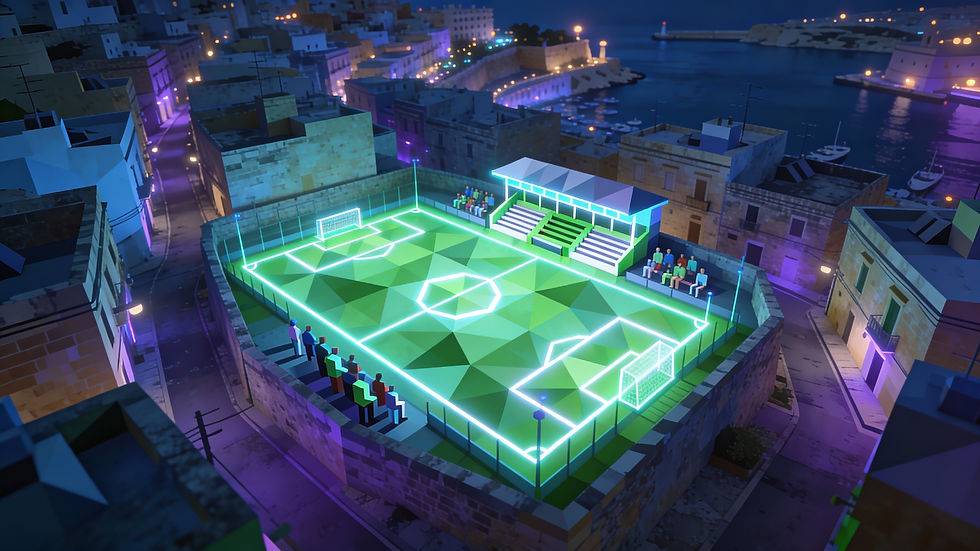
Floriana itself is compact: steep streets, old stone buildings and views down toward the sea and the walls of Valletta. On matchdays, green and white flags hang from balconies and locals gather in supporters’ bars long before kick‑off. The Floriana Supporters Club – founded in 1988 – doubles as a social hub, organising trips, tifos and celebrations that spill into the piazzas when silverware arrives.
The club has always leaned into its Tal‑Irish nickname and identity. Green‑and‑white hoops and shamrock motifs appear on scarves and badges, a nod to that early encounter with the Royal Dublin Fusiliers and the Irish flavour that set Floriana apart from its neighbours. It’s part Maltese, part imagined Irish, and entirely Floriana.
Despite using national stadiums like Ta’ Qali for home fixtures – a quirk of Maltese football, where several clubs share the same main grounds – the feeling around the team is still very local. You’re never far from someone who can reel off line‑ups from the 1960s or tell you exactly where they were when Floriana clinched a particular title.

Highs, Lows and Holding On
Like any historic club, Floriana’s story isn’t a simple upward curve. After dominating large chunks of the 20th century, they endured leaner years, including relegation to the second tier in the mid‑1980s. Getting back up, stabilising and then eventually returning to title‑winning form took patience and a lot of stubbornness.
The 1992–93 league win ended a long drought and felt like a rebirth. The club then faced financial and sporting challenges in the years that followed, but survived periods that might have swallowed less rooted teams. That resilience is a big part of why Floriana inspires such loyalty around town.
Even the 2019–20 title came with a complicated twist. Celebrations in Floriana’s main square drew criticism when crowds ignored pandemic restrictions, leading to national debate and angry headlines. For locals, it was a messy mix of pride and frustration – a reminder that these clubs are not just brands, but living, sometimes imperfect communities.
Why Floriana Is Worth Your Time
If you mainly follow the big European leagues, you might ask: why should I care about a club playing in a tiny island league, in stadiums that hold fewer people than a Premier League away end?
Because clubs like Floriana offer something the superclubs can’t easily replicate:
History you can touch – from the 1894 founding to that first perfect‑defence title in 1909–10 and beyond, you’re never more than a conversation away from someone connected to it.
Supporters who are neighbours first – many fans live and work within walking distance of the bars where they meet pre‑game and the squares where they celebrate cups.
Rivalries on a human scale – Valletta v Floriana may not trend worldwide, but in Malta it stops conversation and fills the stands.
For the price of a mid‑table Premier League pint and a programme, you can sit in the Maltese sun, watch a club with 26 league titles on its badge and hear songs that have never been near a marketing meeting. You’ll feel close enough to the action to hear every shout, yet far enough from the noise of “content” to just enjoy the football.
How Spectata Can Help You Experience It
If you’re tempted to swap one weekend of armchair football for a trip to see Floriana in the flesh, this is exactly the kind of adventure Spectata exists to encourage.
With Spectata you will be able to:
- Follow Floriana FC and learn about the club and get a sense of matchday at Maltese grounds – from where fans gather before kick‑off to the best spots in the stands.
- Read reviews from travelling supporters and locals about the derby atmosphere, the songs, and the quirks of Maltese league scheduling.
- Plan a trip that combines a bit of Mediterranean sunshine with a dive into one of Europe’s most historic yet overlooked football cultures.
Because just like Stenhousemuir and the other clubs on Spectata, Floriana FC shows that the soul of football isn’t confined to the biggest leagues or the most televised fixtures. It lives in places where history, community and identity all pull on the same shirt – in green and white hoops on a rocky Mediterranean island, or in claret and amber under Scottish floodlights.
The next time you’re scrolling for a match to watch, ask yourself: do you want another predictable superclub procession – or a story that’s been building since 1894?
Floriana FC is waiting.

Comments