Essential UK Stock Car Racing Rules: What You Need to Know Before You Watch
- Spec.Tata.

- Dec 14, 2025
- 4 min read
Walking into your first UK stock car racing event can feel like stepping into controlled chaos. Cars spinning, metal crunching, drivers pushing limits – but beneath all that excitement lies a sophisticated rulebook that turns potential mayhem into pure motorsport artistry. If you're planning to catch your first race, understanding these essential rules will transform you from confused spectator to informed fan in no time.
The Heart of Stock Car Racing Rules:
It's All About Contact
Here's what sets UK stock car racing apart from every other motorsport you've ever watched: it's a full contact formula. While Formula 1 drivers treat the slightest touch like a catastrophe, stock car drivers use contact as a legitimate racing tool. This isn't demolition derby madness – it's strategic, skillful, and absolutely thrilling to watch.
The basic objective remains simple: complete your laps around the circuit in the shortest possible time, racing clockwise on a clearly defined track. But how you get there? That's where things get interesting.

What Contact is Actually Allowed
Don't worry – drivers can't just ram each other off the track willy-nilly. The rules are crystal clear about legal vs. illegal contact:
You CAN:
Push a car from behind to help them along (or slow them down)
Spin a car left or right during racing action
Make strategic contact that's part of normal racing
You ABSOLUTELY CANNOT:
Hit parked cars (that's just poor sportsmanship)
Make deliberate driver's door contact (safety first)
Attack cars from or on the safety infield
Follow another car on the driver's side
Hit someone so hard they slam into the fence
Use the outside wall to gain an unfair advantage
Any contact deemed deliberate or dangerous carries immediate penalties and potential suspension. The stewards take safety seriously, even in a contact sport.
Master the Flag System Like a Pro
Nothing screams "rookie spectator" like confusion when the flags come out. Here's your cheat sheet to the most important signals you'll see:
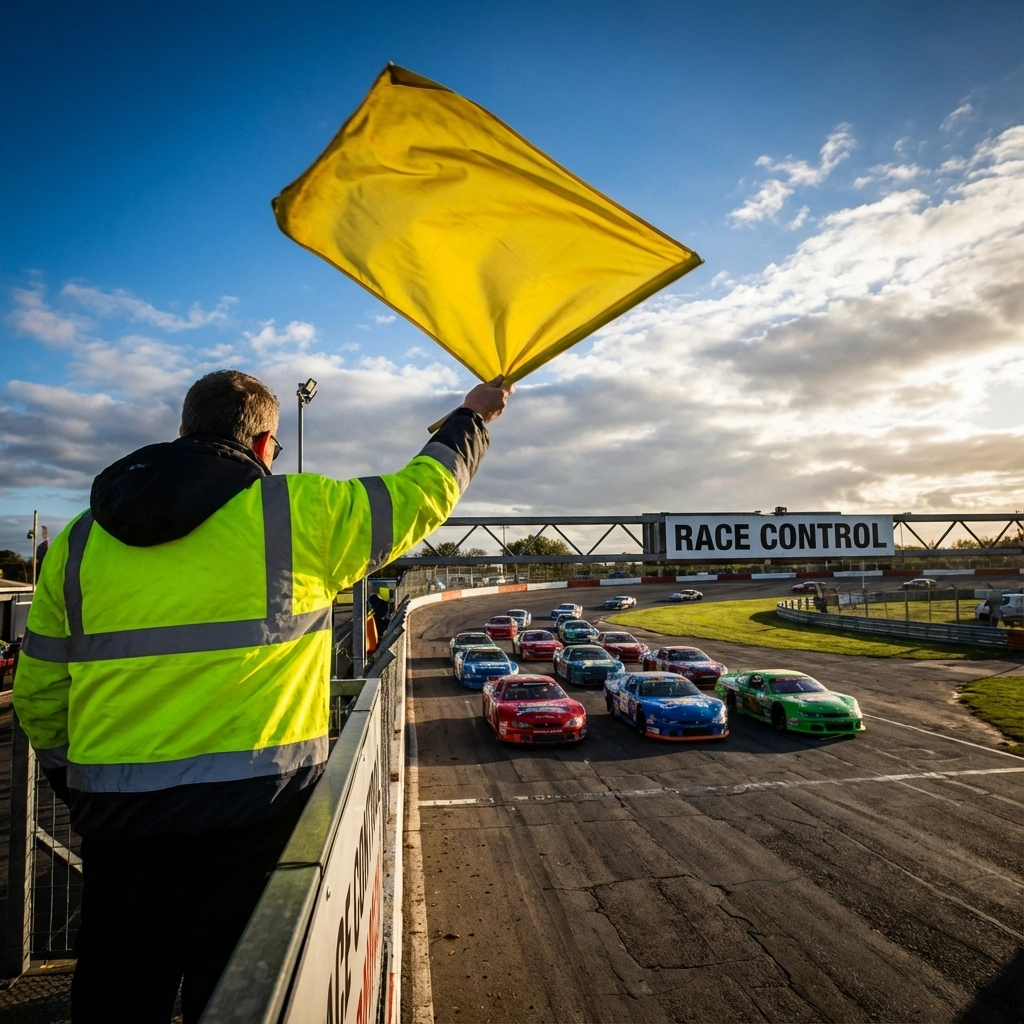
Waved Yellow Flag – The great equalizer. When you see this, drivers must slow to 15mph, hold their positions, and absolutely no overtaking is allowed. Think of it as hitting the pause button on racing action.
White Flag with Blue Spot – Oil alert! This warns drivers about slippery conditions on track. Watch for cautious driving and potential spins.
Waved Black Flag – Game over for someone. This means immediate disqualification, and that driver must exit the track immediately.
Black Cross on White Board – Someone's been naughty. This indicates an infringement that might result in post-race penalties. The action continues, but expect some result shuffling later.
Understanding these flags helps you anticipate race flow and adds another layer of strategy to follow.
The Malcolm Girling Rule: When Backmarkers Get Involved
Here's a rule that perfectly illustrates the sport's commitment to fair play. Named after Malcolm Girling, this regulation covers what happens when a lapped car takes out the race leader.
If race stewards determine that a backmarker's actions violated the spirit of fair racing when affecting the leader, they can revert the results to the point where the offense occurred. Essentially, the leader at that crucial moment becomes the official race winner.
This rule prevents slower cars from unfairly influencing race outcomes and maintains competitive integrity. It's motorsport justice in action.
Safety: The Non-Negotiable Foundation
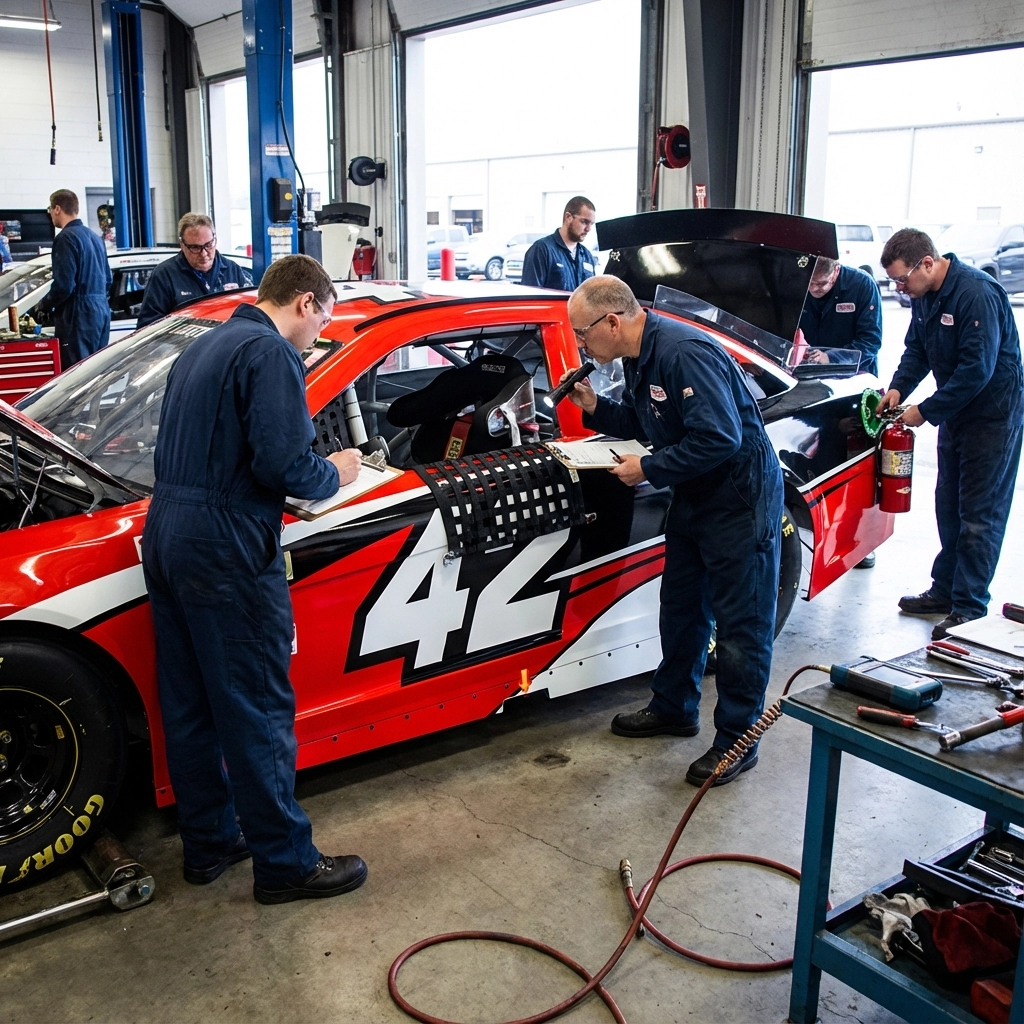
Before any driver hits the track, their car must pass rigorous scrutineering. Think of it as an MOT test on steroids – every safety component gets checked, technical specifications are verified, and compliance is mandatory.
Random engine and fuel checks happen throughout events, and refusing inspection results in immediate suspension of racing privileges. The message is clear: safety and fair play aren't optional.
Modern stock car racing has evolved tremendously in safety consciousness while maintaining its contact racing DNA. Roll cages, fire suppression systems, safety harnesses – the cars are designed to protect drivers while they push the limits.
The Golden Rule: Permission vs. Prohibition
Here's the fundamental principle that governs everything in UK stock car racing: unless the regulations specifically state you can do something, you cannot do it.
This isn't a free-for-all where anything goes until someone complains. Instead, it's a carefully regulated sport where contact is permitted within clearly defined boundaries. This approach ensures competitive racing while maintaining safety standards.
For spectators, this means the contact you're witnessing isn't random aggression – it's calculated strategy within established rules.
What This Means for You as a Spectator
Understanding these rules transforms your viewing experience completely. Instead of watching seemingly chaotic action, you'll start recognizing:
Strategic contact vs. illegal moves
How flag periods affect race strategy
Why certain driver actions result in penalties
The skill required to race competitively within contact rules
You'll appreciate the split-second decisions drivers make – when to be aggressive, when to be patient, and how to use contact as a racing tool without crossing into penalty territory.

The Strategy Layer
Once you understand the contact rules, you'll start seeing the chess match happening at 60mph. Experienced drivers know exactly how much contact they can make and when. They'll use legal pushes to help teammates, strategic spins to break up rival formations, and positioning to avoid becoming targets themselves.
Watch how drivers work together – stock car racing often features team tactics where drivers cooperate to achieve better overall results. Understanding the rules helps you spot these alliances and appreciate the strategic depth.
Ready for the Action
Armed with this knowledge, you're ready to attend your first UK stock car racing event with confidence. You'll understand why the crowd erupts when certain contact happens, why specific flag periods create tension, and how race strategies unfold within the rulebook.
The beauty of UK stock car racing lies in this balance – enough contact to create excitement, enough rules to ensure safety, and enough strategy to reward skill over pure aggression.
Now get out there and experience this uniquely British motorsport phenomenon. Once you understand the rules, you'll appreciate why stock car racing continues to captivate audiences across the country. The controlled chaos suddenly makes perfect sense, and you'll find yourself planning your next visit before the checkered flag waves.

Comments