UK Stock Car Racing Lingo: The Terms Every Spectator Should Know
- Spec.Tata.

- Dec 8, 2025
- 5 min read
Updated: Dec 14, 2025
Welcome to the electrifying world of UK stock car racing! Whether you're heading to your first race or trying to impress your mates with your newfound knowledge, understanding the language of the sport transforms you from casual observer to informed spectator. Think of this as your essential phrasebook for the oval: master these terms and you'll be speaking like a seasoned fan in no time.
The Foundation: Basic Race Terms
Before we dive into the nitty-gritty, let's cover the fundamentals that'll help you follow the action.
Qualifying is where drivers establish their starting positions for the main event. Think of it as the audition before the performance: drivers get limited time to set their fastest lap and secure the best spot on the grid.
Heats & Finals the main event and the stages to get there after qualifying.
Grid slot refers to your starting position on the track. The faster you qualify, the closer to the front you start. It's prime real estate on four wheels.
Lap might seem obvious, but it's worth noting: one complete circuit around the track. Races are measured in laps rather than distance, making every circuit count.
Track Territory: Know Your Circuit
Understanding track terminology helps you appreciate the strategy unfolding before your eyes.
Apex is the geometric centre of a corner: the point where drivers get closest to the inside edge. Hitting the apex perfectly is racing artistry in motion.
Chicane describes a sequence of quick alternating turns designed to slow cars down and create overtaking opportunities. They're the track's way of keeping things interesting.
Kerbs are the raised strips along track edges, usually painted in distinctive colours. They mark the track boundaries and provide a tactile warning when drivers push the limits.
Track limits define the legal racing surface. Step beyond these boundaries and you're looking at penalties. Modern technology uses sensors to detect violations automatically.
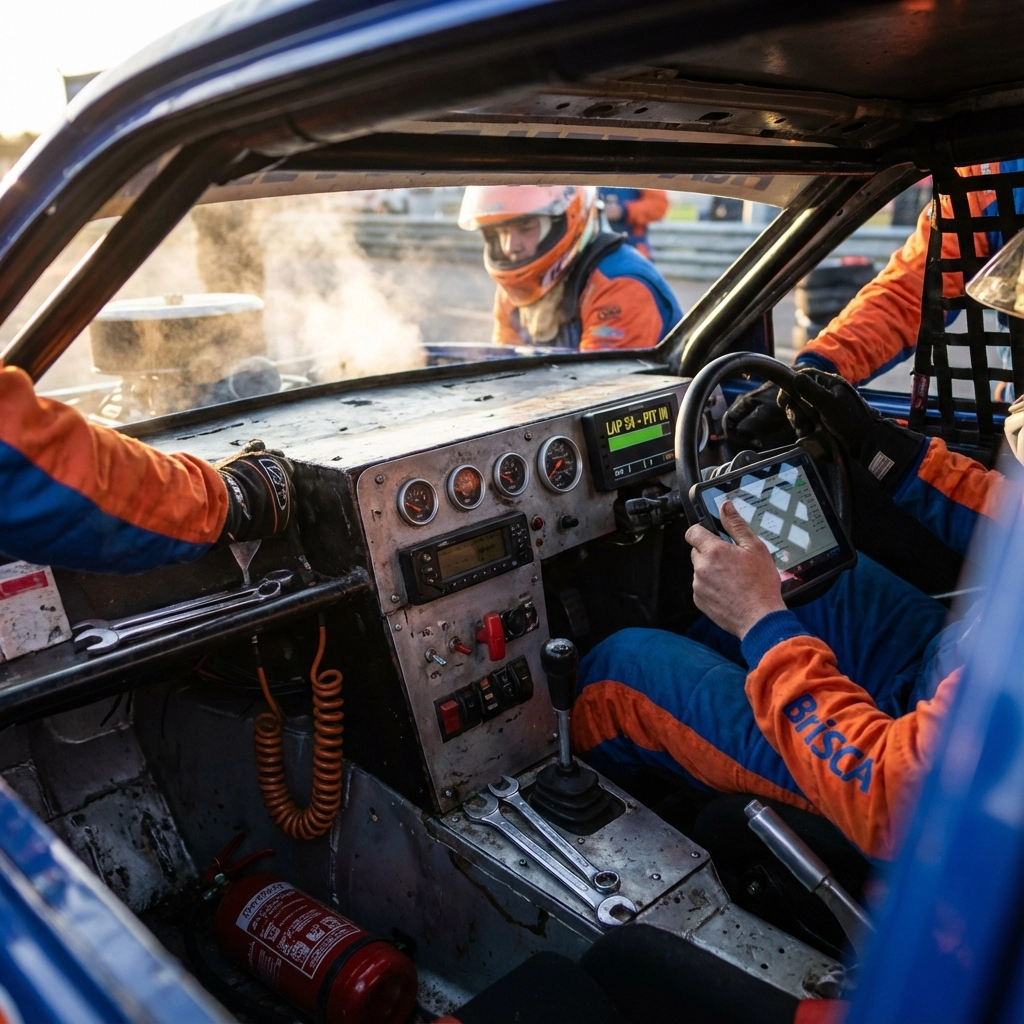
Pits is the service road where teams perform their magic: tyre changes, fuel stops, and quick repairs. It's the backstage area of motorsport.
Race Action: The Drama Unfolds
These terms capture the heart-pounding moments that make stock car racing unmissable.
Overtake is when one driver passes another. Simple in concept, thrilling in execution, and the fundamental building block of racing excitement.
The Big One refers to a massive multi-car accident. While we never want to see anyone hurt, these spectacular crashes are part of stock car racing's DNA.
Binning it means crashing out of the race. It's British motorsport slang for when a driver's day ends early and disappointingly.
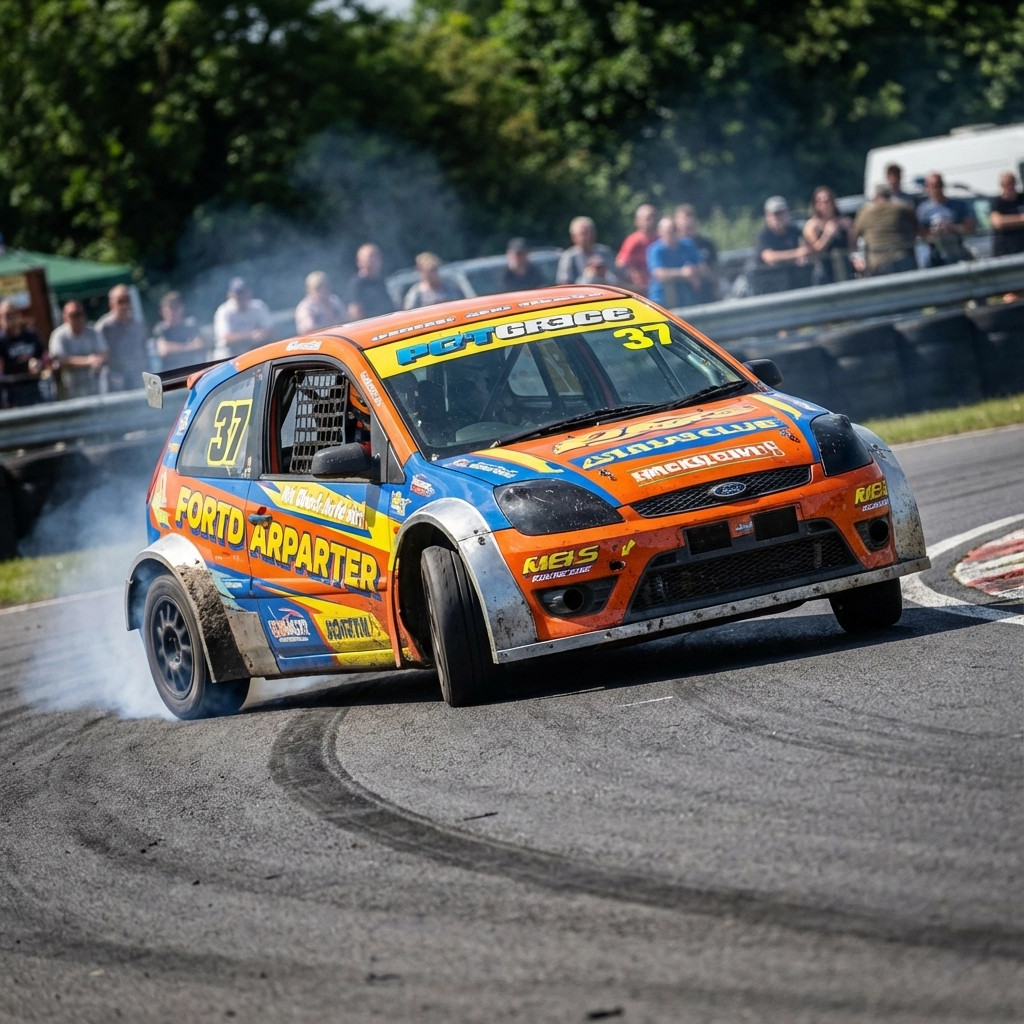
Oversteer occurs when the rear wheels lose grip and slide outward during cornering. The car wants to spin, requiring quick reflexes and skill to control.
Understeer is the opposite: when the front wheels lose grip and the car refuses to turn as sharply as the driver intends. It's like driving on ice, but at racing speeds.
Flag Signals: The Universal Language
Flags communicate crucial information from officials to drivers. Understanding them keeps you in the loop.
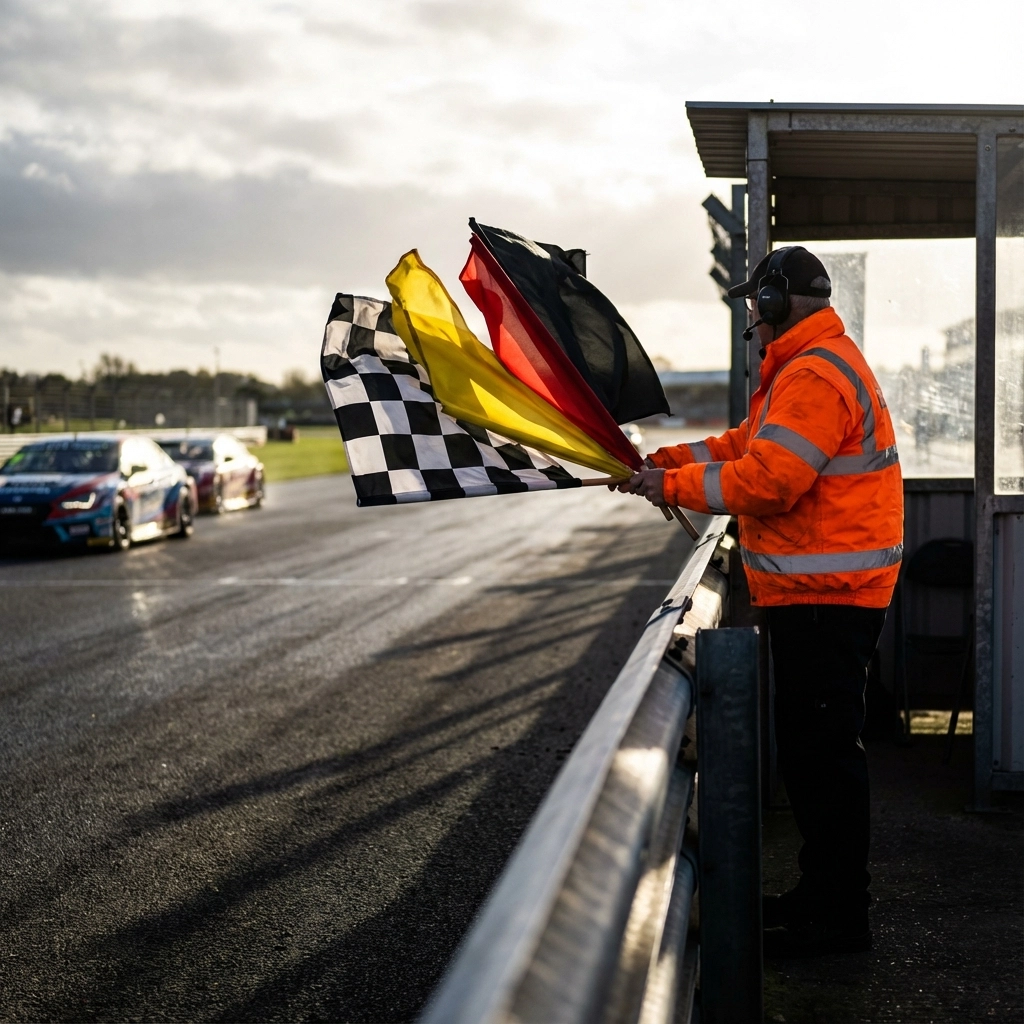
Black-flagged means a driver must immediately report to the pits, usually due to a rule violation or unsafe car condition. It's the motorsport equivalent of being sent to the headmaster's office.
Yellow flag indicates caution: there's danger ahead, no overtaking allowed. Drivers must slow down and proceed carefully.
Red flag stops the session entirely due to serious incidents or dangerous conditions. Everything comes to a halt until officials give the all-clear.
Checkered flag signals race completion. The first driver to see this flag wins: it's the moment every competitor dreams of.
Technical Territory: The Nuts and Bolts
These terms help you understand the mechanical side of the sport.
Transponder is the electronic timing device that tracks each car's position and lap times. It's how officials know who's winning and by how much.
Pit window describes the optimal time during a race for pit stops. Teams calculate fuel consumption, tire wear, and race strategy to hit this sweet spot.
Setup refers to how a team configures their car for specific track conditions: suspension settings, gear ratios, and aerodynamic adjustments all contribute to performance.
Homologation ensures cars meet specific technical regulations. It's the rulebook that keeps competition fair and safety standards high.
People and Teams: The Human Element
Stock car racing is ultimately about people, and these terms reflect the sport's community spirit.
Owner-driver describes someone who both owns and races their car. They're the backbone of grassroots motorsport, combining passion with personal investment.
Factory-backed teams receive official manufacturer support: funding, technical assistance, and promotional backing. They're the professionals of the sport.
Grid walk is the pre-race period when spectators can access the track area, meet drivers, and see cars up close. It's your chance to feel the atmosphere firsthand.
Paddock is the behind-the-scenes area where teams prepare their cars and drivers get ready. Think of it as the sport's nerve center.
Strategy and Tactics: The Chess Game
Understanding these strategic elements reveals racing's cerebral side.
Fuel strategy involves calculating consumption rates, deciding when to refuel, and sometimes pushing the limits of tank capacity to gain track position.
Draft or slipstream is the aerodynamic advantage gained by following closely behind another car. It reduces wind resistance and can provide overtaking opportunities.
Dirty air is the turbulent airflow behind a car that makes overtaking difficult. It's the invisible barrier that separates good drivers from great ones.
Qualifying format determines how starting positions are allocated. Different events use various systems, from single-lap time trials to heat races.
Safety First: Protection and Procedures
Modern stock car racing prioritises safety, and these terms reflect that commitment.
Fire marshals are trained volunteers positioned around the track to respond quickly to incidents. They're unsung heroes of motorsport safety.
Medical car follows the field during the opening laps and remains on standby throughout the event. It's reassurance that help is always close.
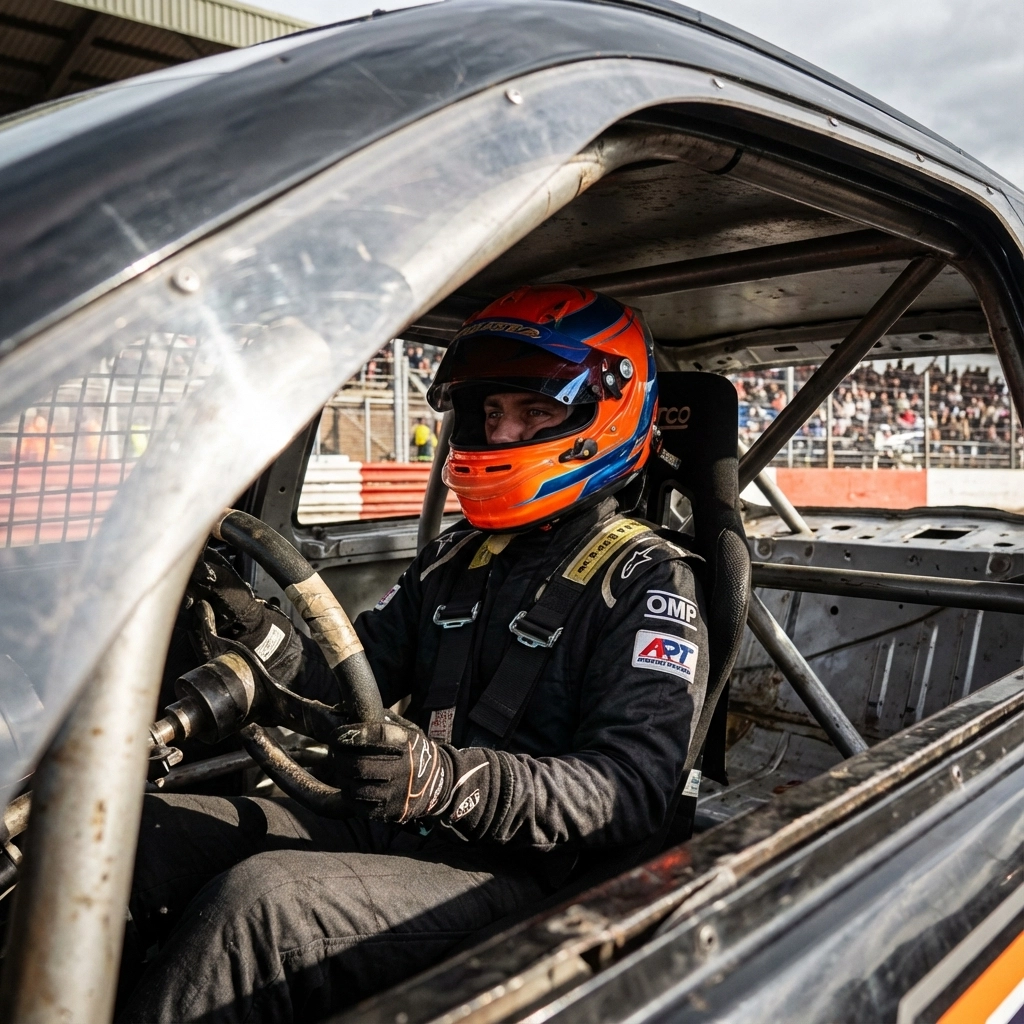
Safety equipment encompasses everything from crash helmets and fireproof suits to roll cages and safety harnesses. Innovation in this area saves lives.
Making It Personal: Your Racing Journey with Stock Car Racing Lingo.
Now that you're armed with essential vocabulary, you're ready to dive deeper into UK stock car racing culture. Join conversations with confidence, ask informed questions, and appreciate the sport's rich traditions.
Consider connecting with the racing community through Spectata's stock car discussion groups where enthusiasts share insights, photos, and upcoming events. The more you engage, the more this exciting world opens up.
Remember, every expert was once a beginner. Your journey into stock car racing starts with understanding the language, but it flourishes when you experience the sport firsthand. The roar of engines, smell of racing fuel, and electricity in the crowd: that's where this vocabulary truly comes alive.
Welcome to the family. Your adventure in UK stock car racing begins now and you know the Stock Car Racing Lingo!

Comments